
Last updated November 25, 2026
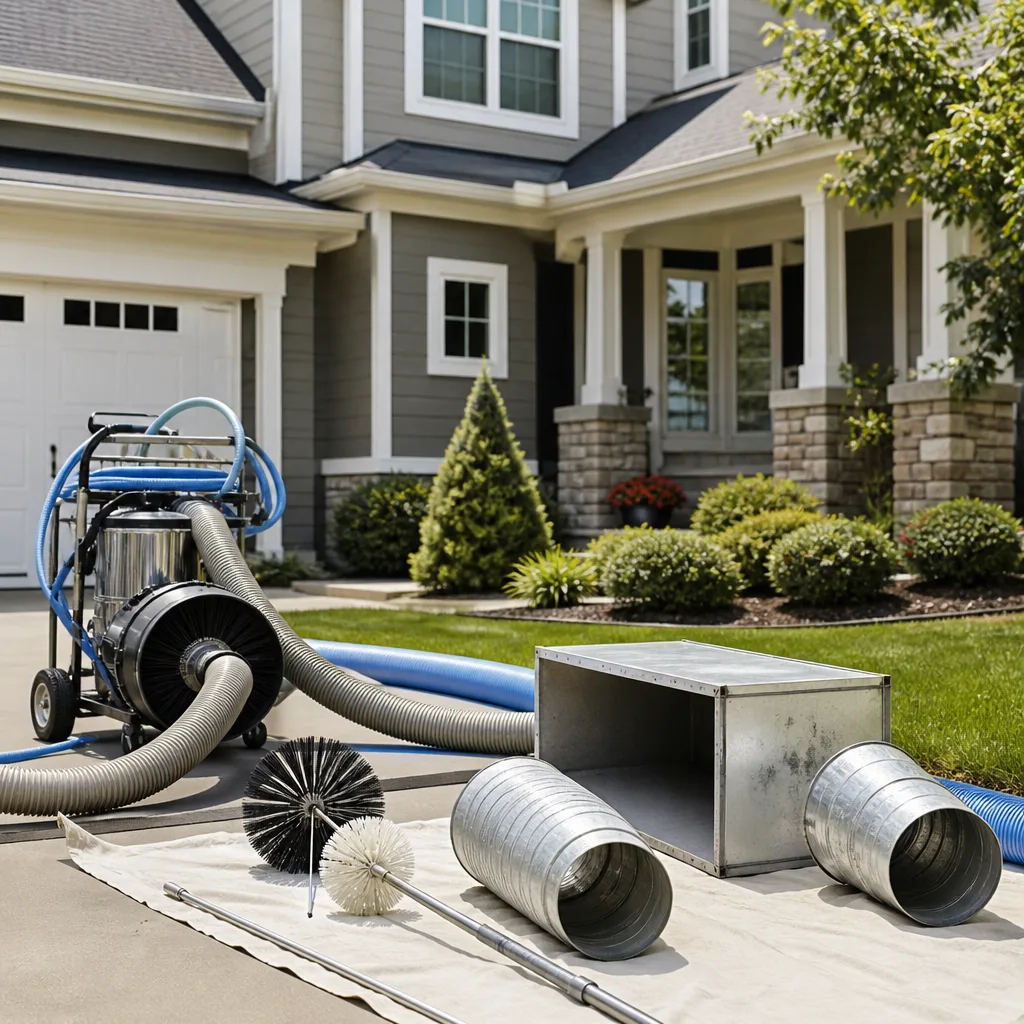 Whole-home duct cleaning
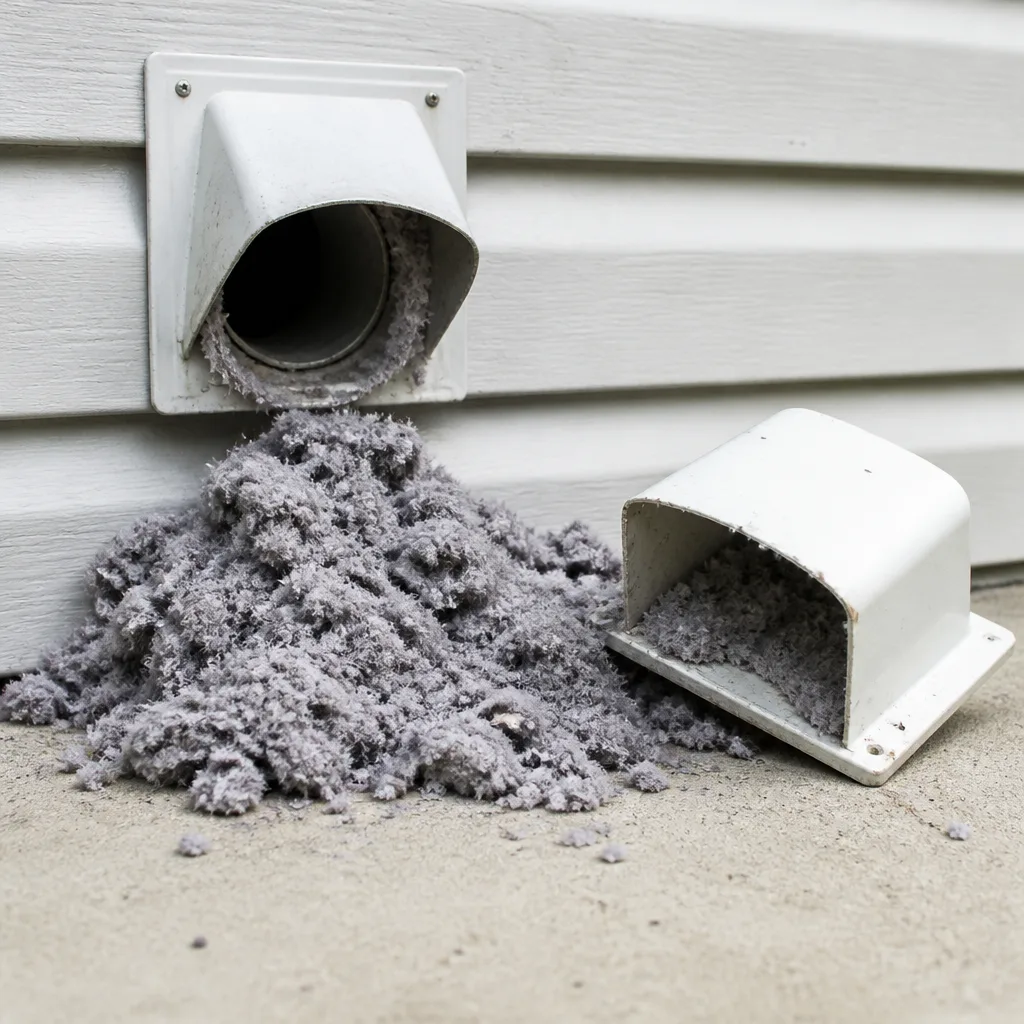 Dryer vent cleaning
 Camera inspection
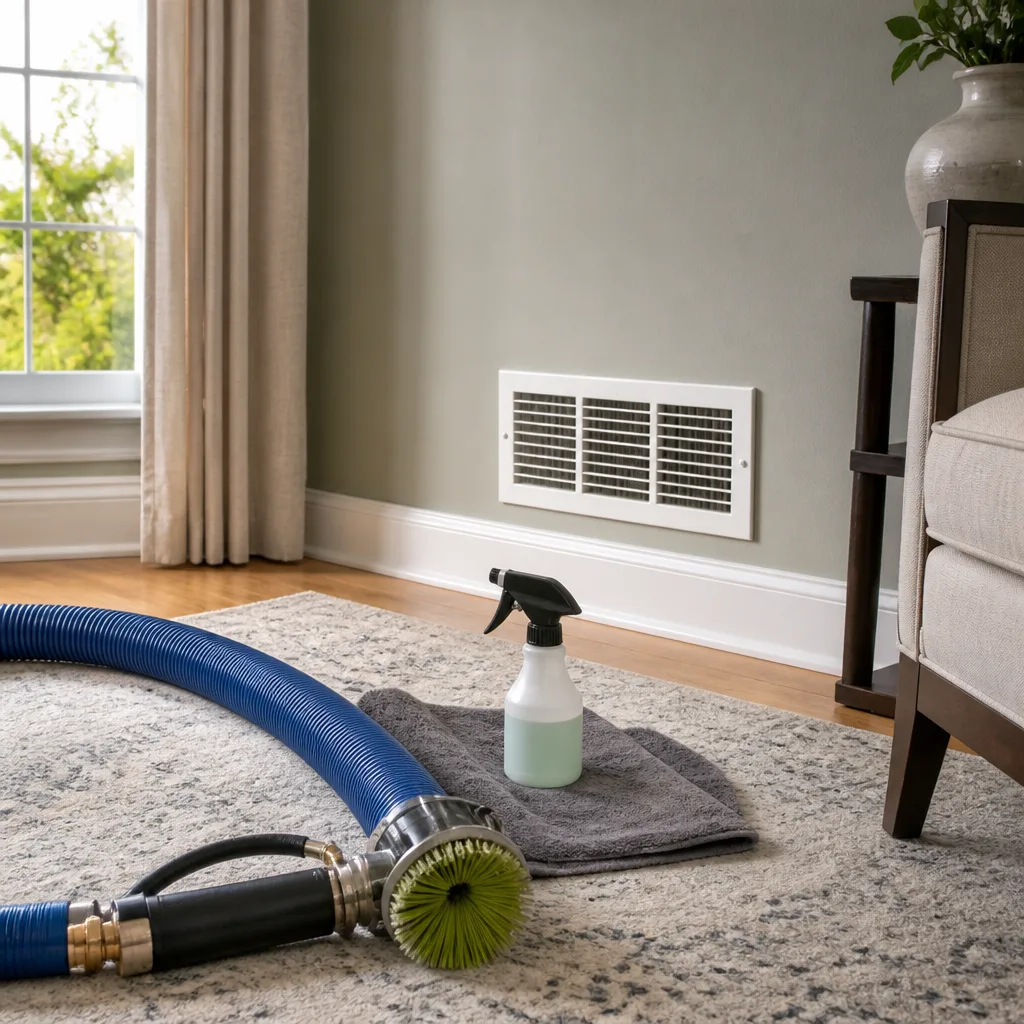 Sanitizing & deodorizing
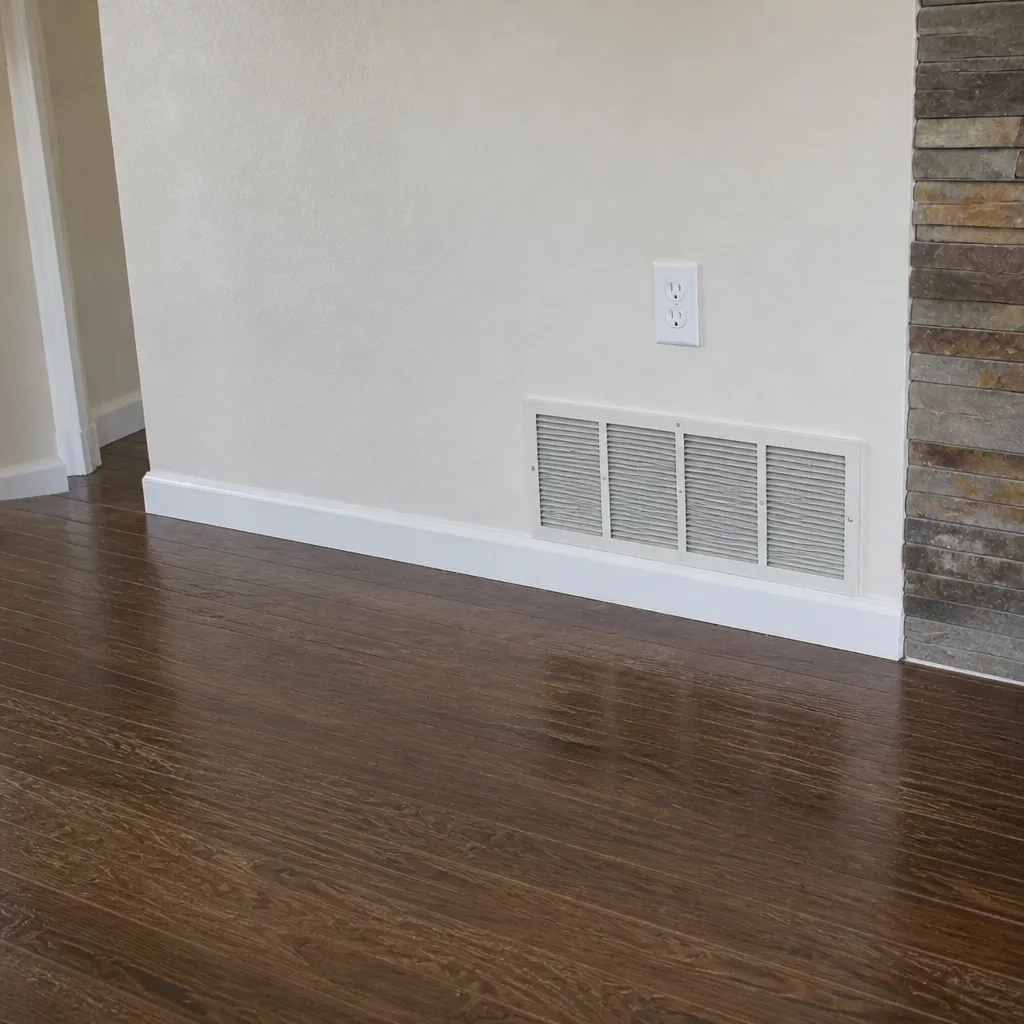
Whole-system duct and dryer vent check with before-and-after photos - you see exactly what came out of your vents
That "$99 whole-house special" is a bait ad - the real number appears once they are in your hallway, or the "clean" is a shop-vac at the register. We photograph the inside of your ducts before and after instead.
Air Duct Cleaning Troubleshooting in Central Park: Common Problems and How to Fix Them
If your vents are blowing weak air after a cleaning, the job probably didn’t finish. That sounds harsh, but it’s the most common thing we run into: a homeowner in Central Park pays for a duct cleaning, the crew spends an hour waving a shop vac at the registers, and a week later the airflow is exactly as bad as before. The system looks cleaner, but something structural was missed. What follows is the diagnostic logic a trained technician actually uses to separate a duct problem from an HVAC problem, read what uneven room temperatures mean, trace a musty smell back to its moisture source, and decide when a job needs a camera inspection versus a targeted re-clean. You’ll be able to narrow down your own system before anyone shows up.
Quick Answer
Most persistent duct problems in Central Park fall into one of five buckets: a collapsed or disconnected flex duct in an unconditioned space, a blocked main trunk line, a cleaning that never reached the plenum or branch runs, a moisture source feeding musty odors, or an HVAC equipment fault that mimics a duct problem. The fastest way to tell them apart is to test airflow at each register and inspect the accessible duct connections before assuming the ducts need another cleaning. If airflow is weak at some vents and strong at others, you have a distribution problem, not a dirt problem.
Styles & brands we work with
- Whole-home duct cleaning
- Dryer vent cleaning
- Camera inspection
- Sanitizing & deodorizing
Table of Contents
- Duct Problem vs. HVAC Problem: How to Tell the Difference
- Weak or Uneven Airflow After Cleaning: What It Actually Means
- Why Musty Smells Come Back Within Days (and Where to Look)
- The Register Tests You Can Run Yourself
- The Plenum Problem Nobody Talks About
- When You Need Camera Inspection vs. a Zone Re-Clean
- Dust Returning Fast: Leaks, Sealing, and Filtration
- Dryer Vent Troubleshooting in Central Park Homes
Duct Problem vs. HVAC Problem: How to Tell the Difference
Before you call anyone, get clear on which half of the system is failing. A duct problem affects distribution: some rooms get plenty of air and others get none, or every vent is weak at once. An HVAC problem affects the air itself: the system runs but the air comes out lukewarm, the blower never kicks on, or the unit short-cycles. Homeowners in Central Park often call us convinced their ducts are clogged when the actual fault is a failing blower motor or a refrigerant charge issue. Cleaning the ducts won’t fix either of those.
Here’s the shorthand we teach: if the system moves air and heats or cools it, but the air doesn’t reach every room, that’s a duct issue. If the system runs but the air is the wrong temperature, or the fan sounds wrong, that’s an equipment issue.
How a technician separates the two
- Check the blower first. Pull the filter and confirm the blower spins and moves air with the door closed. A weak blower mimics a blocked duct every time.
- Verify temperature rise or drop. Compare supply air temperature to return air temperature at the equipment. If the split is far off spec, the equipment is the problem, not the ducts.
- Map airflow room by room. Write down what each register does at full fan. Patterns reveal whether the fault is at a trunk, a branch, or the plenum.
- Inspect accessible duct connections. Disconnected and crushed flex runs are visible at boots, tees, and in attics and crawlspaces.
If you suspect the equipment side, our HVAC cleaning service covers the air handler, coil, and blower cabinet, and the technicians inspect duct integrity at the same visit. Our technicians have up to 15 years of experience reading these systems, so the separation is quick once they’re on site.
Weak or Uneven Airflow After Cleaning: What It Actually Means
Uneven airflow after a cleaning tells you the system is still blocked or leaking somewhere the cleaning didn’t reach. Three causes dominate: a disconnected or collapsed flex duct, debris still lodged in a branch or trunk, or an undersized branch that was never sized right in the first place. Central Park homes include a mix of older construction with hard-ducted systems and newer builds with flex runs in attics and knee walls. Flex duct is convenient and cheap to install, but it kinks easily and fails when it’s not supported properly.
Here’s how we separate the three:
- Disconnection. One room gets almost nothing while the rest of the house is fine. Flex has slipped off a boot or plenum collar, or a run is crushed flat against a joist.
- Debris blockage. Airflow drops gradually over months, not overnight. Construction debris, drywall dust, or rodent nesting material has bridged the run. A re-clean of that zone fixes it.
- Undersized branch. That room has always been weak, as long as the homeowner can remember. No amount of cleaning changes it. The branch needs a damper rebalance or resizing as part of an Air Duct Cleaning Central Park assessment.
Where airflow is uneven across rooms in Central Park, a professional-grade inspection with a Rotobrush camera and airflow gauge on the run in question settles the question in minutes.
Why Musty Smells Come Back Within Days (and Where to Look)
A musty smell that returns within days of cleaning is a moisture signal, not a cleaning failure. Dirt and dust don’t regenerate in 72 hours. Moisture does. If the smell comes back that fast, something is keeping the duct system or the equipment wet, and re-cleaning alone will never fix it. The odor is your cue to hunt for the water.
The four moisture sources we find most often
- Wet evaporator coil and drain pan. A clogged condensate drain or a pan that doesn’t pitch toward the drain keeps the coil wet and feeds microbial growth. This is the single biggest offender in Central Park’s dry summer swing, when cooling runs hard and the pan cycles constantly.
- Improperly sealed flex duct in unconditioned space. A run in a hot attic picks up condensation when cool supply air hits warm humid air at a leak. The insulation gets soaked, the flex crimps, and the musty smell rides downstream.
- Return duct drawing from a crawlspace or humid basement. Unsealed return duct undersizing means the system pulls humid air from the wrong place.
- Recent water intrusion. A roof leak, plumbing drip, or condensation line routed into the duct chase leaves the insulation wet long after the visible water is gone.
This is where cleaning and sealing need to happen together. Our air duct cleaning work includes an Abatement Technologies air filtration setup on site so debris and spores are contained during the service, but the fix is sealing the moisture path. Duct Repair & Sealing addresses the leak itself; the Air Quality & Sanitizing service with Guardsman-grade products addresses the microbial load left behind on duct surfaces after the moisture is cut off.
The Register Tests You Can Run Yourself
You can narrow down a duct problem to a specific zone before a technician ever arrives, using nothing but your hands, a tissue, and a notepad. These tests won’t diagnose the whole system, but they will tell a professional exactly where to start, which saves time and, in our experience, catches the problems that surface cleanings miss. Do them with the system running on fan-only so temperature doesn’t confuse the airflow reading.
The tissue test
- Hold a single-ply tissue against a supply register grille. It should flutter visibly and pull toward the grill with steady suction. A limp tissue means weak flow at that register.
- Test every supply register in the house in the same pass, one room at a time. Write down what you see: strong, weak, or none.
- Do the same at every return grille. A return that doesn’t pull a tissue is starving the system and can cause the entire house to lose airflow.
The pattern read
- One weak register, everything else fine: a branch problem. Disconnected flex, crushed run, or damper closed somewhere upstream.
- Multiple weak registers on one side of the house: a trunk problem. Trunk line blocked, disconnected from the plenum, or a zone damper stuck.
- Everything weak at once: system-wide. Blower, filter, main trunk, or plenum connection. Check the equipment side first.
- Strong flow but weak throw: the register grille itself is restrictive or covered by furniture, curtains, or a carpet edge.
Take photos of the duct connections you can see at boots and plenum entries. That visual record is the difference between a guess and a diagnosis when a technician walks in.
The Plenum Problem Nobody Talks About
The plenum is the transition box that connects the air handler to the trunk lines, and it’s where a large share of cleanup jobs fail to finish. A crew that cleans only the branch runs and never reaches the plenum leaves the biggest debris reservoir in the system untouched. Every cubic foot of air that moves through the house passes through that box. If the plenum is packed with drywall dust, framing sawdust, or construction debris from a renovation, you’re breathing it through the entire system.
Central Park has a steady stream of renovations and turnover purchases, and both leave construction debris in the plenum. Drywall dust that’s been pulled into the plenum during a project settles into the corners and stays there until a professional system with real vacuum pressure reaches it. That’s not a shop-vac job. It’s a two-truck setup with HEPA-rated containment, which is why we run Abatement Technologies filtration on site during every major cleaning. The filtration contains the debris so it doesn’t just get relocated into the living space.
A plenum the size of a shoebox to a full HVAC closet needs the right tools: Rotobrush agitation to break the debris loose and Nikro high-vacuum to pull it out of the system, not just off the surfaces.
How to know the plenum got missed
- Dust reappears on registers or furniture in days, not weeks.
- The photo report skips the plenum entirely or shows only the branch runs.
- Airflow from the nearest registers drops after the equipment, not before.
- The return air smells musty even after the cleaning.
When You Need Camera Inspection vs. a Zone Re-Clean
Camera inspection is worth the time when the run is inaccessible and a guess would cost you a wall. A zone re-clean is worth it when the run is accessible, the pattern points to a specific branch, and the root cause is debris. Getting this right matters more than the price difference. Sending a camera down a run that could have been re-cleaned is a waste. Re-cleaning a run with a collapsed duct inside it will never fix the airflow.
Camera inspection is the right call when:
- The problem run is enclosed in a wall, ceiling cavity, or hard-ducted chase with no accessible connection.
- Airflow in a room has always been weak and no visible branch or boot explains it.
- A musty smell persists after a moisture source has been found and corrected.
- The system is older hard duct and you suspect a collapsed or broken segment.
- A renovation or pest activity happened in the recent past and continuity is in doubt.
A zone re-clean is the right call when:
- One branch is weak and the flex connection at the boot and plenum is visible and intact.
- Airflow dropped slowly over months and construction debris is suspected.
- The main trunk and plenum were cleaned but a single run shows a debris bridge.
- The register is accessible and the neighboring registers are working normally.
In Central Park, flex runs in attics and knee wall cavities are common, and those are accessible enough to inspect without a camera. Hard-duct runs in walls from older construction are where camera inspection earns its keep.
Dust Returning Fast: Leaks, Sealing, and Filtration
Dust that returns to the registers or furniture in under two weeks points to a leak in the return side of the system, not to a cleaning that failed. The return duct runs at negative pressure. Any leak in it pulls air from wherever it’s sitting, and in a Central Park home that’s often attic, crawlspace, or garage air loaded with insulation fibers and dust. Cleaning the ducts doesn’t fix a return leak. Sealing does.
This is the gap between cleaning and repair that most one-visit crews don’t cross. Duct Repair & Sealing is a separate service for exactly this reason: mastic and mesh over boot penetrations, plenum seams, and the return chase, then re-balance airflow. After that, filtration is the next lever. A high-MERV filter sized to the equipment will catch the fine particles that a cheap pleated filter passes. In our experience, a properly sized dryer vent cleaning schedule also keeps lint out of the return path in garages where the dryer shares the mechanical space. Honeywell and Aprilaire filtration and humidification upgrades are worth discussing once the ducts are sealed, because the upgrade only performs as designed if the system is airtight.
The dust-return checklist
- Inspect the return chase for open joints, disconnected boots, and unsealed penetrations at the air handler.
- Confirm the filter is the correct MERV rating for the blower and seated without gaps.
- Check the return grille for a partially closed damper or furniture blocking it.
- Look at the supply diffusers for residues that suggest a return leak upstream.
Dryer Vent Troubleshooting in Central Park Homes
Dryer vent problems in Central Park homes rarely look like air duct problems, but they share the same failure pattern: restricted airflow and lint buildup in a run nobody can see. A dryer that takes two cycles, a laundry room that feels damp, or a lint screen that fills in one load is a vent problem, not a dryer problem. And unlike air ducts, a restricted dryer vent is a genuine fire risk, because lint plus heat is the ignition recipe. That’s a separate service from air ducts, and worth scheduling on its own.
What to check
- Disconnect the dryer and inspect the transition duct behind it. Crushed or kinked flexible foil is the most common issue.
- Look at the exterior termination. A stuck flapper or a screen full of lint cuts airflow hard.
- Confirm the run length and the number of elbows. Every extra elbow cuts airflow, and long runs need periodic cleaning more often.
- If the dryer still runs hot after the vent is cleared, the dryer itself needs service, not another cleaning.
We treat dryer vent cleaning as its own service, and we recommend scheduling it independently of air duct work so the run gets the attention it needs.
Common Mistakes to Avoid
- Cleaning only the branch runs and calling it done. Central Park systems run through a main trunk and plenum that hold the largest debris reservoir. A cleaning that skips the plenum leaves the system half-done, and the dust comes back in days.
- Assuming a musty smell means the cleaning failed. Smell returning in 72 hours is moisture, not dirt. Re-cleaning without finding the source fixes nothing.
- Re-cleaning a run that has a collapsed duct inside it. Camera inspection is cheaper than cleaning the same run three times and never solving the airflow problem.
- Cleaning the ducts before sealing the return leaks. A leaky return pulls fresh dust straight out of the attic and back into the system. Seal first, then clean.
- Skipping the register test. Twenty minutes of tissue and notebook work tells you which zone to focus on. Without it, the technician is guessing at the whole house.
- Letting a renovation contractor leave construction debris in the plenum. Drywall dust from a Central Park remodel settles deep and becomes part of every breath your family takes until the plenum is professionally cleaned.
- Replacing the furnace instead of checking the ducts. Weak airflow reads as a failed HVAC unit to an experienced equipment tech. If the equipment is healthy but the air isn’t reaching the rooms, the ducts are the answer, not a replacement.
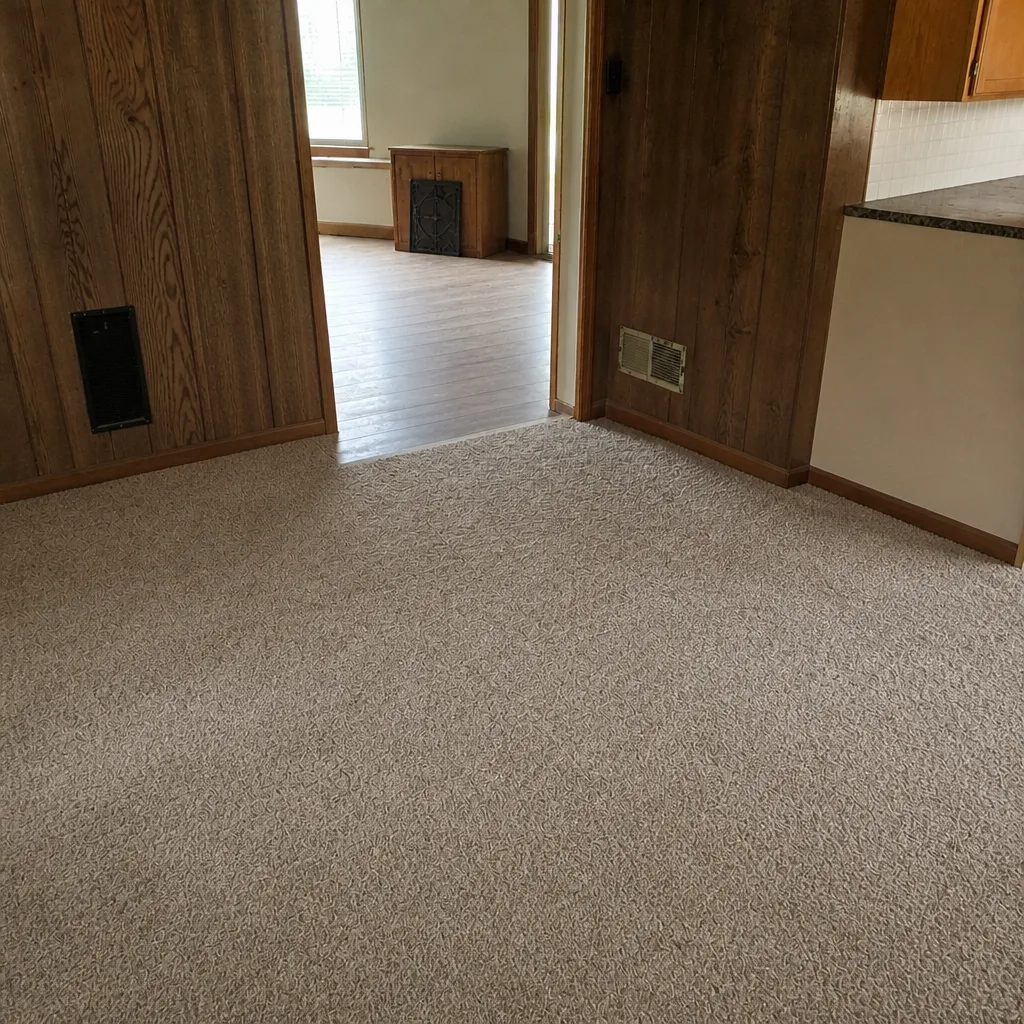
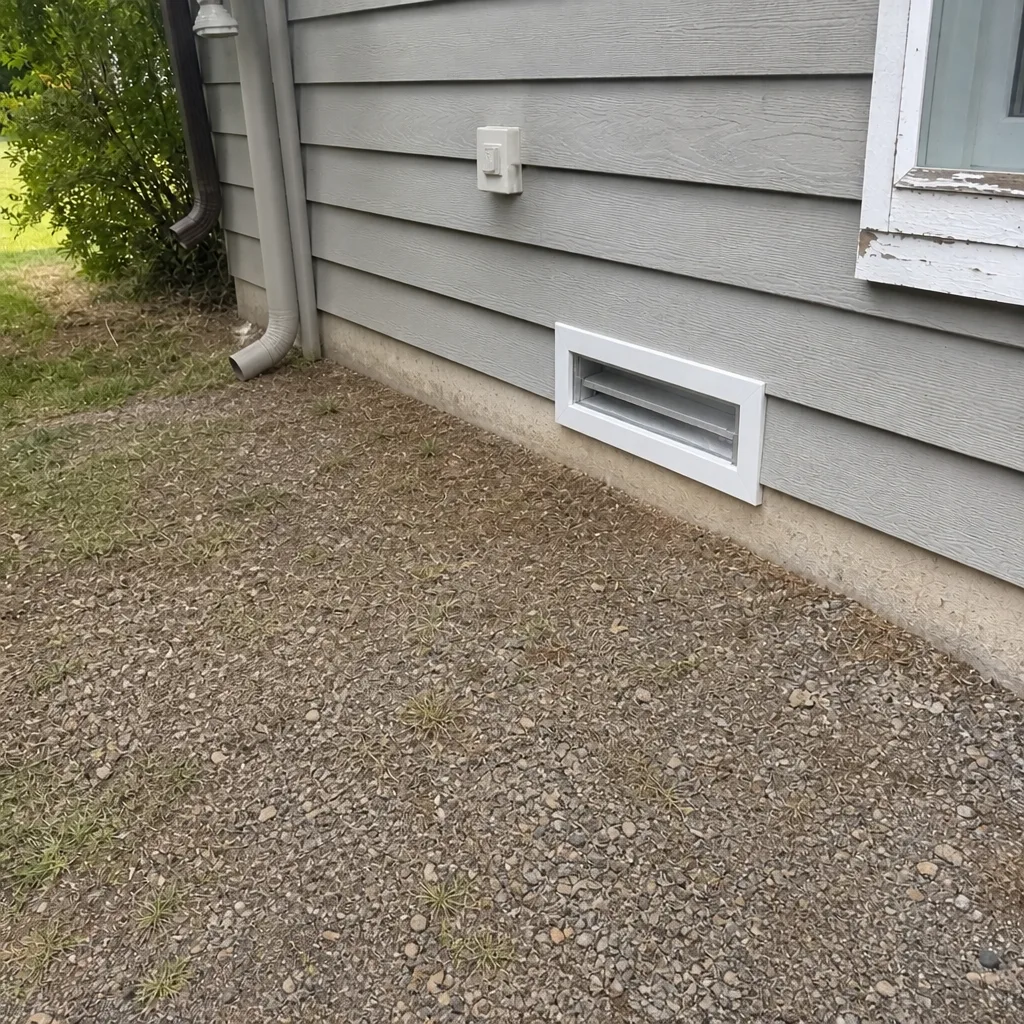
See the difference
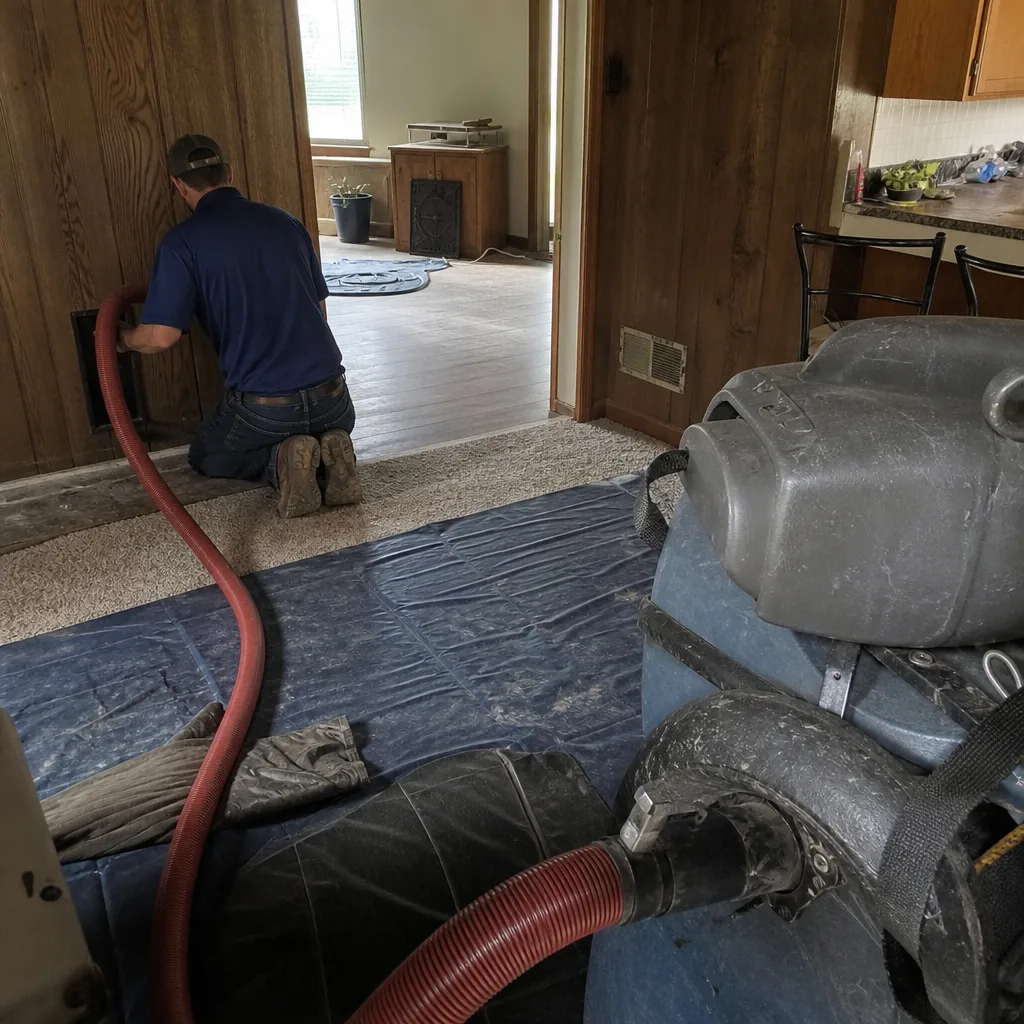 Before
 After
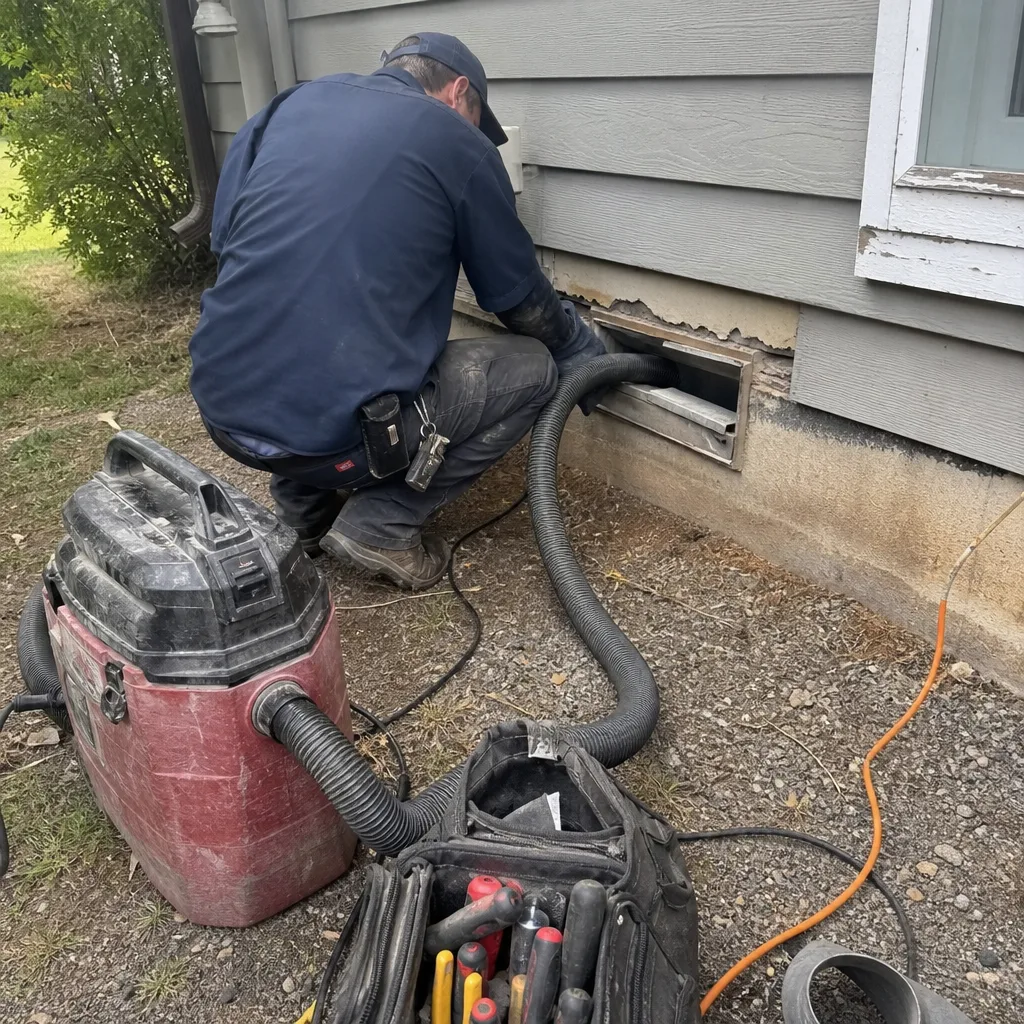 Before
 After
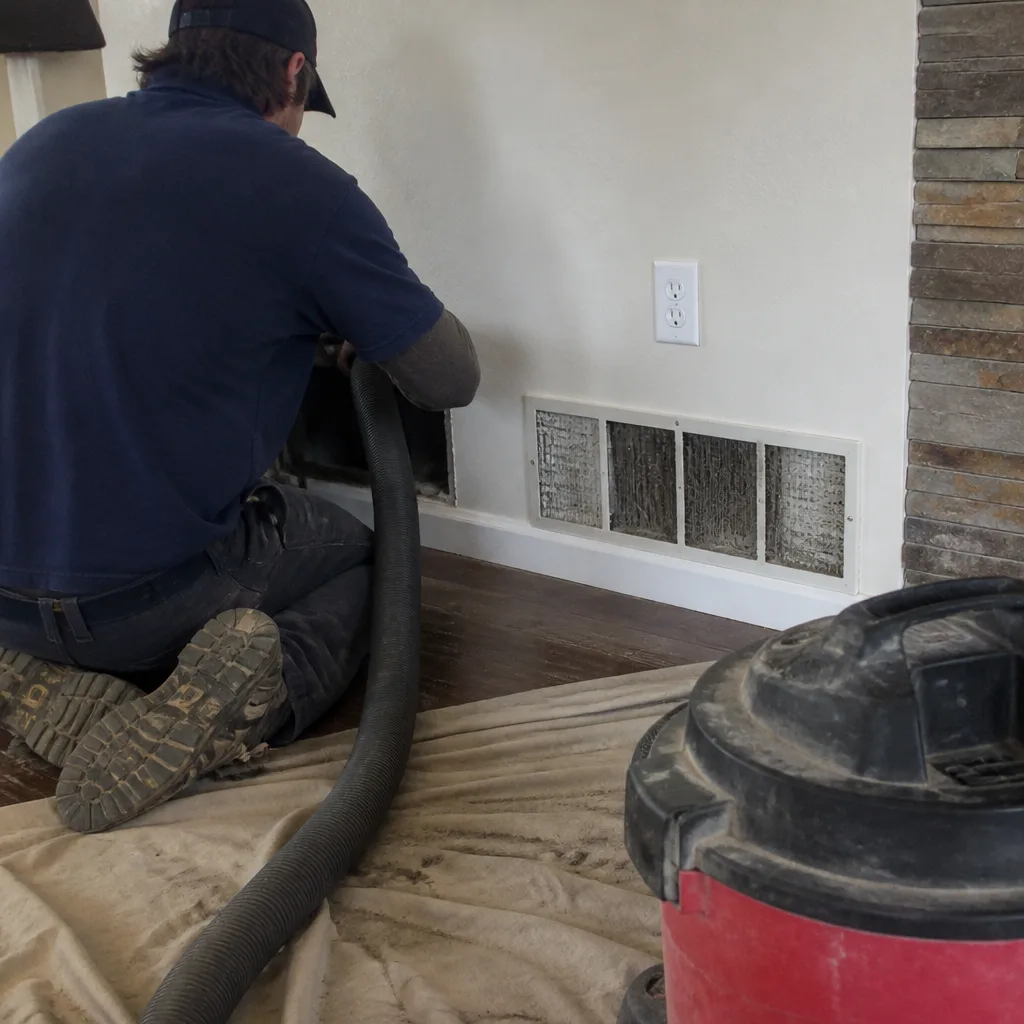 Before
 After
When to Call a Professional
Call a professional when the register tests point to a whole-system problem, when a musty smell returns after cleaning, when a renovation left visible construction debris in the plenum, or when a branch is weak and the connection is buried in a wall. Those are the cases where the tools matter: camera inspection, HEPA-rated containment, and an air filtration system sized for the job. Air Duct Cleaning Central Park offers free estimates in Central Park – call (833) 509-5525. We answer 24/7. Fast dispatch from 7am to 7pm, Sunday through Friday. Every job is quoted as one flat price per system, agreed before work starts, with before-and-after photos of your ducts so you can see the work was done.
Frequently Asked Questions
Air duct cleaning in Central Park is priced per system, not per vent, and the exact price is set by the written estimate after the technician sees the system size and condition. We quote one flat price for the whole system before any work starts, so there’s no per-vent surprise once the crew is on site. Call (833) 509-5525 for an exact quote – estimates are free.
Cheap quotes usually price per vent and skip the plenum, the trunk line, and the return side of the system – exactly the areas where most problems live. A quote that doesn’t mention the plenum or the equipment cabinet isn’t a full-system clean. Call (833) 509-5525 when you want a written, whole-system price before work begins.
Ask for before-and-after photos of the ducts, including the plenum and trunk line, and confirm the price in writing before the crew starts. Any crew that won’t show photos of those areas is telling you something. Call (833) 509-5525 – we document the work with photos from the same zones before and after.
Most Central Park homes need a professional duct cleaning every three to five years, with a shorter interval after a major renovation, a pet addition, or a new home purchase where the history is unknown. If the register tape test shows strong airflow and no musty smell, you can stretch the interval. Call (833) 509-5525 when the airflow or the smell tells you it’s time.
We can clean and sanitize the same day, but a smell that returns within days is a moisture problem, and the moisture source has to be found and sealed before the smell stays gone. That usually means Duct Repair & Sealing alongside the cleaning. Call (833) 509-5525 to get it diagnosed properly.
Central Park’s dry summers and cold winters push HVAC systems through wide temperature swings, and the swing is what stresses flex ducts and unsealed connections. Condensation forms at leaks in unconditioned spaces and drives musty smells back into the living space. Homes near the lake and along the eastern edge of the neighborhood see the same pattern. Annual register checks catch most of it before it becomes a full repair.
The Bottom Line
Airflow uneven across rooms, dust returning in days, or a musty smell that comes back inside a week are not signs that you need another cleaning. They’re signs that the system has a structural problem the last cleaning missed. Separate equipment failures from distribution failures first (blower, temperature split, then airflow mapping). Read the register pattern to narrow the problem to a branch, trunk, or plenum. Treat a fast-returning musty smell as a moisture hunt, not a cleaning complaint. Use camera inspection on enclosed runs and a targeted re-clean on accessible ones. Then seal the leaks so the next cleaning holds. When the register tests point to the plenum, the trunk, or a buried branch, that’s the moment to bring in a crew with the right equipment – and Air Duct Cleaning Central Park is here to do exactly that.
Call (833) 509-5525 for a free estimate. We answer 24/7. Fast dispatch from 7am to 7pm, Sunday through Friday.
Written by the team at Air Duct Cleaning Central Park.